
Introduction: Sales Funnel for Fitness Coaches
You post consistently. Views climb, followers trickle in, and a few DMs say "love this!" But the inquiries that turn into paying clients? Those stay unpredictable.
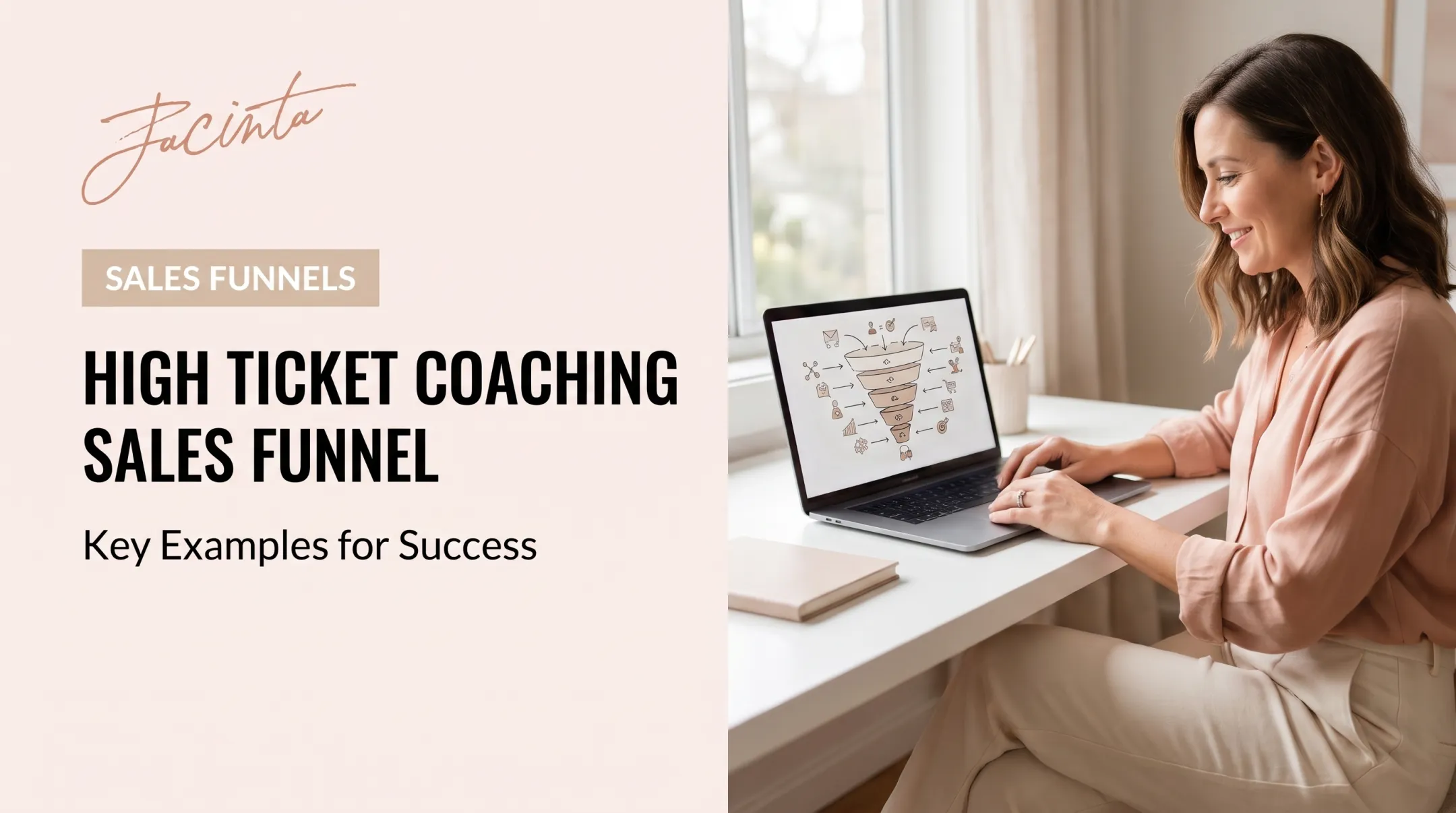
That gap usually comes from a missing path between attention and enrollment. A sales funnel is the intentional journey from first contact to lead, conversation, purchase, onboarding, and retention. It is a designed client path, not a software tool or a pile of random tactics.
This guide walks through a practical framework: clarify the offer, attract the right audience, capture and nurture leads, convert ethically, deliver a strong client experience, and improve the funnel with data.
Key Takeaways
- Start with one specific client, problem, and offer, not more posting.
- Give every stage one purpose and one next step.
- Pick a conversion path (sales page, low-risk offer, or call) that fits your price and trust level.
- Track stage-to-stage movement and fix the biggest bottleneck before buying traffic.
Start With the Strategy: Define the Client, Offer, and Funnel Path
Define the ideal client and their buying problem
Pick one primary segment: busy professionals, beginners, postpartum clients, athletes, or people who need accountability. Then name the immediate problem they want solved, in their words.
Specific positioning makes your content, lead magnets, testimonials, and sales conversations speak to the same person. Broad messaging attracts curiosity. Narrow messaging attracts buyers.
Build a clear offer around an outcome
Spell out what a client actually gets:
- Format and duration
- Level of access and support
- Deliverables
- Price
- Boundaries (what you don't cover)
Keep the core coaching offer separate from free education and lower-commitment entry points. And skip guaranteed weight-loss or health claims.
Choose a conversion path
| Path | Best when |
|---|---|
| Sales page with direct checkout | Simple, lower-priced, self-explanatory offer |
| Application plus discovery call | Premium, customized, or hard to explain without context |
| Low-risk front-end offer | Audience is cold and needs to experience your method first |
For example, Devlin Consulting documents a high-ticket application funnel for programs priced at $3,500 and up, because those offers need a fit conversation. A $49 starter plan doesn't.
Map one next step for every stage
The flow looks like this: content or referral, lead magnet, email or DM follow-up, consultation or offer, payment, onboarding. Each step gets one primary call to action. Two competing buttons mean fewer clicks on both.

Protect trust with accurate promises
Trust is part of the funnel. Keep these in mind:
- Promise realistic outcomes and be clear about who the program fits
- Treat client privacy and intake information carefully
- Get permission before publishing testimonials
- Stay within coaching scope, such as general nutrition education rather than individualized meal plans without qualifications, per ACE guidance
The FTC says specific-result testimonials usually imply others can expect the same, and "results not typical" doesn't fix that. Verify current FTC and platform rules before you publish any health or transformation claim.
Build the Top and Middle of the Fitness Sales Funnel
Attract the right prospects with problem-aware content
Short-form video, educational posts, email, partnerships, referrals, and community involvement all work. Their job is to reach people who already recognize the problem. HubSpot's 2024 survey of marketers ranked short-form video first for ROI, though that's cross-industry self-report, not a coaching benchmark.
Rotate beyond motivational posts:
- Common mistakes your ideal client makes
- Decision points ("Do I need a gym membership to start?")
- Your methodology, explained simply
- Behind-the-scenes client support
- Proof of process
Capture attention with a specific lead magnet
A lead magnet is a resource exchanged for contact information. The best ones solve one narrow problem fast: a checklist, assessment, starter plan, quiz, mini training, or short workshop. A "3-Day Desk-Job Mobility Reset" beats "Ultimate Fitness Guide."
The capture mechanism needs four parts:
- A landing page or DM keyword
- Permission-based email collection
- Immediate delivery of the resource
- A clear next step
Devlin Consulting's own examples, like "5 Ways to Make Sales Online," follow the same logic: one promise, one problem.
Nurture before asking for commitment
A short sequence does the heavy lifting. Devlin Consulting's welcome sequences typically run 5 to 7 emails. A simple version:
- Deliver the resource
- Teach your approach
- Address a common objection
- Share relevant proof
- Introduce the coaching offer

Follow up fast and personally. Automation should handle the routine, but when a lead asks a specific question, a human answers. Comply with CAN-SPAM: accurate sender info, a physical address, and a working opt-out honored within 10 business days.
Use social proof carefully
Permission-based testimonials work best when they show the starting point, actions taken, support received, and outcome. Nielsen's 2021 research found 88% of global respondents trust recommendations from people they know. That's trust, not proven conversion, but it's a good reason to build referrals into your process.
Avoid misleading edits, unsupported guarantees, and testimonials implying everyone gets the same result.
Organic, paid, or both
Organic content, referrals, and partnerships build the base. Paid ads should amplify a funnel that already has a clear offer, capture point, and follow-up process. Otherwise you're paying to leak leads.
Tag every lead's source. High-intent referrals behave differently from cold ad traffic, and you want to know which is which.
Convert Leads Into Paying Fitness Coaching Clients
Use a low-risk entry offer when it improves trust
A consultation, assessment, short challenge, workshop, or introductory package lets prospects experience your method without receiving the whole program. A low-risk offer is specific, achievable, easy to start, and connected to your core service. It does not need a deep discount.
Funnel types like 5-day challenges and tripwires (a low-ticket front end followed by an upsell) are common ways to do this.
Sales page, application, or discovery call
A solid sales page includes:
- Who the program is for
- The problem it solves
- Your coaching process
- What's included
- Expectations
- Proof
- Price or payment details
- FAQs
- One prominent call to action
A call or application earns its place when the program is premium, customized, or tough to understand without knowing the prospect's circumstances.
Run a consultative, ethical conversation
Use a simple structure. Explore:
- Goals
- Current obstacles
- Previous attempts
- Urgency
- The support they want
IDEA's consultation guidance calls this gap analysis: where they are, where they want to be, and the steps between.
Then help first. Say honestly who the program is and isn't for, and what you can reasonably support.
Handle objections without pressure
Price, time, confidence, past disappointment, fit, and doubt about results are the usual concerns. Answer the underlying worry before you reach for a discount.
Ask qualification questions early. For anyone who isn't a fit, offer a respectful "not now" or a referral. That builds more reputation than a reluctant sale.
Reduce friction at payment and move straight into onboarding
Keep checkout simple. Include:
- Transparent terms
- A confirmation message
- A client agreement
- An intake form
- A clear explanation of what happens next
Checkout friction costs sales. Baymard found 17% of US online shoppers abandoned an order because checkout was too long or complicated. That figure is from ecommerce, but the same principle applies to coaching checkout.

Trigger the first onboarding action right after purchase. Momentum fades fast, and uncertainty turns into buyer's remorse.
Deliver, Retain, and Grow From Each Client
Create onboarding that produces an early win
A first-week sequence might include:
- Welcome message and expectations
- Intake or assessment
- Program access
- Scheduling details
- One achievable action that shows progress
Templates, reminders, and a client management system keep this consistent. Your personal touch stays in the messages that matter.
Turn delivery into retention
Set a predictable rhythm that includes:
- Check-ins on a set schedule
- Progress reviews
- Program adjustments
- Accountability touchpoints
Celebrate behavior-based wins like sessions completed and sleep routines, not only scale or appearance changes.
A 2025 trial found 15 of 17 supervised participants met a session-completion threshold versus 25 of 47 self-guided participants. The study measured workout completion, not renewals. Even so, supported clients follow through more often.

Supported clients also stay longer and produce stronger testimonials and referrals.
Build referrals, testimonials, and continuity
Ask for feedback at a natural high point, like a milestone. Get written permission before publishing anything. Ask for referrals as an invitation, never an obligation.
Then offer a next step only if it fits: continued coaching, a maintenance program, group support, or an advanced service.
Measure, Diagnose, and Optimize the Funnel
Track the numbers for each stage
Monitor reach, leads, qualified leads, booked calls, show rate, closed clients, revenue, and retention. Useful stage-to-stage formulas:
- Lead rate = leads ÷ reach × 100
- Qualified rate = qualified leads ÷ leads × 100
- Booking rate = booked calls ÷ qualified leads × 100
- Show rate = calls attended ÷ calls booked × 100
- Close rate = new clients ÷ calls attended × 100

Skip universal benchmarks. Results vary by niche, price, traffic source, qualification, and audience warmth. Your own trend line is the useful comparison.
Find the bottleneck before making more content
Use a weekly spreadsheet or CRM with lead source, status, next action, outcome, and reason lost. Then read the pattern:
- Strong reach, few leads: capture or call-to-action problem
- Many leads, few qualified: positioning problem
- Strong interest, weak sales: offer, fit, or sales-process problem
Fix the weakest stage closest to revenue first.
Test one change at a time
Change one variable: the lead magnet, CTA, follow-up timing, sales-page message, or booking process. HubSpot's A/B testing guide recommends isolating a single change. Record it, and wait for enough data so one odd week doesn't mislead you.
If you'd rather not build this alone, Devlin Consulting works with women fitness coaches who want individualized business strategy, systems, automations, and coaching rather than another generic funnel template. Programs are application-based, and the team declines applicants it doesn't believe it can help.
Frequently Asked Questions
What is a sales funnel for a fitness coach?
It's the journey from awareness through lead capture, nurturing, purchase, onboarding, and retention. It also shows you where prospects stop progressing.
Do fitness coaches really need a sales funnel?
Not a complicated tech stack, but a repeatable path helps. It prevents missed follow-ups, clarifies next steps, and reduces reliance on referrals and daily posting.
What should be the first step in building a fitness sales funnel?
Define one ideal client, their problem, the coaching outcome, and your core offer. Choose tools and channels afterward.
What makes a good lead magnet for fitness coaching?
It solves one specific, immediate problem for your intended client and leads naturally to your paid method. It never promises guaranteed results.
Do I need a sales call to sell fitness coaching?
Not always. Sales pages and direct checkout suit simpler offers, while applications and calls fit higher-priced, customized, or complex coaching.
How do I know where my fitness sales funnel is losing leads?
Compare stage-to-stage counts and rates, and review lead status and lost reasons. Fix the weakest stage nearest revenue before increasing traffic.