
Introduction
You're posting consistently. You're showing up on Instagram, sending the occasional email, maybe even running a promotion here and there. But the clients and sales still feel unpredictable — feast one month, crickets the next.
Here's the reality: according to Constant Contact's 2025 SMB survey, 42% of small business owners spend less than one hour per day on marketing, and only 18% feel confident in their marketing efforts. The problem usually isn't effort. It's the absence of a system.
That system is a lead generation funnel. Building one doesn't require a big team, an expensive tech stack, or a marketing degree. It requires the right structure, applied to your specific business.
This article covers:
- What a lead generation funnel actually is
- The four stages every funnel moves through
- Five practical steps to build yours
- The mistakes that are draining your potential sales
Key Takeaways
- A lead generation funnel moves strangers to paying customers through a repeatable, structured path.
- Without a funnel, you're relying on timing and luck — not strategy.
- Your email list is an asset you own; your social media following is not.
- A lead magnet is your funnel's entry point — it works 24/7 even when you're not available.
- A 3-to-5 email welcome sequence separates funnels that convert from opt-ins that go nowhere.
What Is a Lead Generation Funnel (and Why You Need One)
A lead generation funnel is the structured path a potential customer takes from first discovering your business to making a purchase. It's a deliberate sequence of steps that moves someone from "I just found this person" to "I need to buy from her."
Most women entrepreneurs are doing what Jacinta Devlin calls "random acts of marketing" — posting here, promoting there, sending a DM, throwing up a sale. Without a cohesive path connecting all of it, that effort doesn't compound. It just disappears.
The Difference Between a Lead Funnel and a Sales Funnel
These terms get used interchangeably, but they serve different functions:
| Funnel Type | Owned By | Primary Goal |
|---|---|---|
| Lead Funnel | Marketing | Attract and capture interest (opt-ins, email subscribers) |
| Sales Funnel | Sales/Conversion | Convert captured interest into paying customers |
The lead funnel comes first. You can't convert people who never entered the system.
Your email list is owned land; your social media following is rented land. If Instagram changes its algorithm or your account gets suspended, that audience is gone. Your email list belongs to you. That's why building a funnel that captures email addresses is the most valuable marketing infrastructure a woman entrepreneur can build.
The 4 Stages of a Lead Generation Funnel
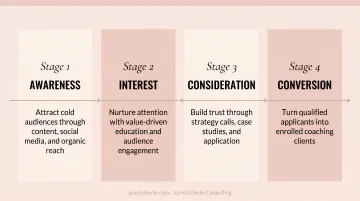
Every funnel moves someone through four stages: from stranger to buyer. What works at stage one won't work at stage four — each stage needs its own content and approach.
Awareness: Getting Found by the Right People
This is where potential customers first encounter your brand — through a Reel, a Google search, a referral, or a Pinterest pin. The goal at this stage isn't to sell. It's to be visible and credible to people who have the problem you solve.
For women entrepreneurs, the most effective awareness channels by platform:
- Instagram — Reels, Stories, and feed content for almost every business type
- TikTok — High-reach organic content for boutiques, direct sellers, and product brands
- Facebook — Groups and personal profiles for community-driven businesses and direct sellers
- Pinterest — High-traffic potential for boutique owners, bloggers, and LTK creators
Interest: Turning Attention Into Engagement
Once someone discovers you, the interest stage is where they move from passive scrolling to active engagement — they follow your account, click your link, or sign up for your email list.
This is where a lead magnet does its job. Give people a compelling reason to go deeper, and make it easy to do so with a clear call to action and a simple opt-in.
Consideration: Building Trust and Desire
At this stage, your potential customer is evaluating whether you're the right fit. She's reading your reviews, watching your Stories, comparing options. The question she's asking is: Can I trust this person?
This is where nurturing carries the weight — email sequences, consistent content that speaks to her specific struggles, and direct conversation through DMs all build the trust required before she's ready to buy.
Conversion: Turning a Lead Into a Customer
Once trust is built, conversion is simply what happens next — buying the product, booking the call, enrolling in the program. But the path has to be clear and frictionless.
A strong conversion path requires:
- A compelling product/service that matches where she is in her journey
- A strong, specific call to action
- Easy checkout or booking
- A follow-up sequence if she doesn't act immediately
How to Build Your Lead Generation Funnel in 5 Steps
This isn't a corporate playbook. This is a solopreneur-friendly system that works for coaches, boutique owners, direct sellers, and service-based women entrepreneurs.
Step 1: Define Your Ideal Client
The funnel only works if you know exactly who you're trying to attract. Not "women who want to make money" — but "women coaches who are hitting $3K months and don't know how to scale past it."
Specificity is everything. The right niche makes your content stop the right person mid-scroll, makes your lead magnet resonate, and makes your product/service convert. Vague targeting fills your list with people who will never buy.
Step 2: Create a Lead Magnet That Solves One Specific Problem
A lead magnet is a free, high-value resource offered in exchange for an email address. It's the entry point of your funnel and it works around the clock.
The key word is specific: one urgent problem your ideal client is already looking for a solution to — not a vague "helpful guide." Jacinta Devlin's own lead magnets are textbook examples of this: "5 Ways to Make Sales Online," "10 Affiliate Link Programs to Apply For," and "30+ Content Ideas That Work" each address a single, concrete pain point for a defined audience.
The rule: your lead magnet should create natural demand for what you sell. If it doesn't connect to your paid product/service, you'll attract the wrong people.
Step 3: Build a Simple Landing Page and Email Opt-In
Your lead magnet needs a dedicated, distraction-free landing page. Keep it stripped down — no navigation, no competing offers. Include only:
- A clear, benefit-driven headline
- A brief description of what they'll get
- A short form (name and email only)
- A button that delivers the freebie
According to Unbounce's Q4 2024 benchmark data, the median landing page conversion rate across industries is 6.6% — a benchmark worth tracking once your funnel is live. Tools like Flodesk (the platform Jacinta uses and recommends for solopreneurs), Showit, or even a simple MailerLite page are enough to start.
Step 4: Drive Traffic to Your Funnel
Traffic is the fuel. For most women entrepreneurs starting out, the strongest entry points are:
- Social media content with a clear CTA linking to the lead magnet
- Email list building through collaborations and referrals
- Link-in-bio tools that route followers directly to the opt-in page
- Paid ads (optional, and best added after the funnel is proven with organic traffic)
Organic social content linked to a lead magnet is the most accessible starting point — no ad budget required.
Step 5: Set Up a Follow-Up Email Sequence
This is where most solopreneurs drop the ball. They get the opt-in and go silent.
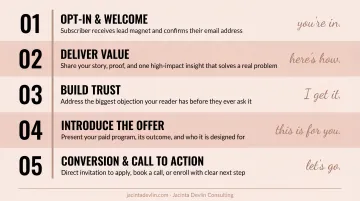
A simple 3-to-5 email welcome sequence keeps the conversation going after someone subscribes. The sequence should:
- Deliver the lead magnet and confirm the opt-in
- Introduce you and your story
- Provide additional value connected to her problem
- Introduce your paid product/service with a clear next step
Devlin Consulting builds welcome sequences of 5–7 emails as a standard component of every funnel. Done right, those emails do the selling for you while you sleep — moving a new subscriber from "curious" to ready to buy before you ever speak to her directly.
If you're unsure which funnel structure fits your specific business model, working with a business strategist like Jacinta Devlin can help you build the right architecture instead of copying a template that was designed for someone else's business.
Lead Magnets That Work for Women Entrepreneurs
The best lead magnet is one your ideal client would pay for if you charged for it. It should be specific, fast to consume, and directly connected to your core paid product/service.
Types of Lead Magnets by Business Category
| Business Type | Lead Magnet Format That Works |
|---|---|
| Coach or service provider | Checklist, strategy guide, or free discovery call |
| Boutique owner | Style guide, lookbook, or discount opt-in |
| Direct sales rep | Sales script, income guide, or productivity checklist |
| Affiliate/influencer | Curated resource list, content idea bank, or monetization guide |
| Any business | Mini training, 5-day challenge, or template |
According to Interact's quiz conversion research, quizzes achieve a 40.1% start-to-lead conversion rate — worth considering for boutique owners or product businesses where personalized recommendations add immediate value.
What Makes a Lead Magnet Actually Convert
- Title is specific and benefit-driven — "The 5-Day Sales Script for Social Sellers" beats "Free Guide" every time
- Designed to be consumed quickly — one focused page outperforms a 30-page download nobody finishes
- Ends with a clear next step that points directly toward your paid product/service
All three of those elements hinge on one thing: alignment. The connection between the freebie and the product/service is non-negotiable. If someone opts in for a checklist on Instagram captions and your paid product/service is a business coaching program, you've attracted the wrong person.
How to Nurture Leads and Move Them Toward a Purchase
Getting someone on your email list is the beginning, not the finish line. Most people need multiple touchpoints before they buy — and nurturing is the consistent, value-driven communication that builds the trust required to get there. Those touchpoints happen across a few key channels, and each one does a different job:
The Core Nurturing Channels
- Email sequences — build depth and drive conversion; your highest-leverage channel
- Social media content — maintains visibility and speaks to different funnel stages
- Direct DMs — build individual relationships with engaged followers
Mailchimp's benchmark data shows an average email open rate of 35.63% — far above Facebook's organic reach rate of approximately 1.52%. That gap is why every serious women entrepreneur should be building her email list, not just her follower count.
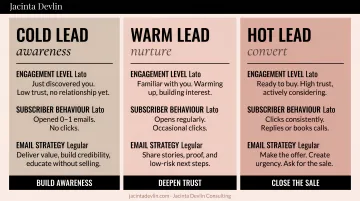
Basic Lead Segmentation
You don't need a complex tech setup to segment your list. Basic tagging in Flodesk or MailerLite gets the job done. Start by separating:
- Cold leads (just opted in, never engaged further)
- Warm leads (clicked a sales link, replied to an email)
- Hot leads (visited your sales page, booked a call, or asked a direct question)
Mailchimp's research found that segmented campaigns had 100.95% higher click rates than non-segmented campaigns. When your message matches where someone actually is in their buying journey, the difference shows up directly in your numbers.
Funnel Mistakes That Are Costing You Sales
No Funnel at All
Relying entirely on social media followers without capturing contact information is the most common and costly mistake. If the algorithm changes or your account gets restricted, that audience vanishes. An email list is an asset you own. Your Instagram following is not.
A Lead Magnet That's Disconnected From Your Offer
If the freebie attracts people who would never buy your paid product/service, you've built a large list of unqualified leads. Low conversion rates follow. The lead magnet and the paid product/service must speak to the same person at different stages of the same journey.
Not Following Up Fast Enough
The MIT/InsideSales lead response study found that the odds of contacting a new lead drop 100x when response time moves from 5 minutes to 30 minutes. For solopreneurs wearing every hat in the business, manual follow-up at that speed is impossible.
An automated welcome sequence closes that gap. The moment someone opts in, they receive an immediate response — no team, no manual sending, no missed window.
That's the difference between a funnel that converts and one that leaks. If you're ready to stop patching holes and build the right system from the start, Jacinta Devlin works with women entrepreneurs 1:1 to map and build funnel architecture that fits their specific business — not a generic template.
Frequently Asked Questions
What is a lead funnel?
A lead funnel is the structured path a potential customer takes from first discovering your business to becoming a buyer. It moves people through four stages — Awareness, Interest, Consideration, and Conversion — with each stage requiring a different approach.
What are the 4 stages of the funnel?
The four stages are: Awareness (getting found by the right people), Interest (building engagement and capturing contact info), Consideration (building trust through nurturing), and Conversion (turning a lead into a paying customer).
What is the 5-minute rule for leads?
The 5-minute rule refers to research showing that responding to a new lead within 5 minutes dramatically increases your chances of conversion compared to waiting hours or days. Automated email welcome sequences let solopreneurs hit that window even without a team available.
What is the best lead magnet for a small business?
The best lead magnet solves one specific, urgent problem for your ideal client and connects directly to your paid product/service. Depending on your business, that might be a checklist, quiz, mini training, curated resource list, or free consultation.
What is the difference between a lead funnel and a sales funnel?
A lead funnel focuses on attracting and capturing new leads — that's the marketing side. A sales funnel focuses on converting those captured leads into paying customers — that's the conversion side. You need both, but you can't convert leads you never captured — so the lead funnel sets everything else in motion.