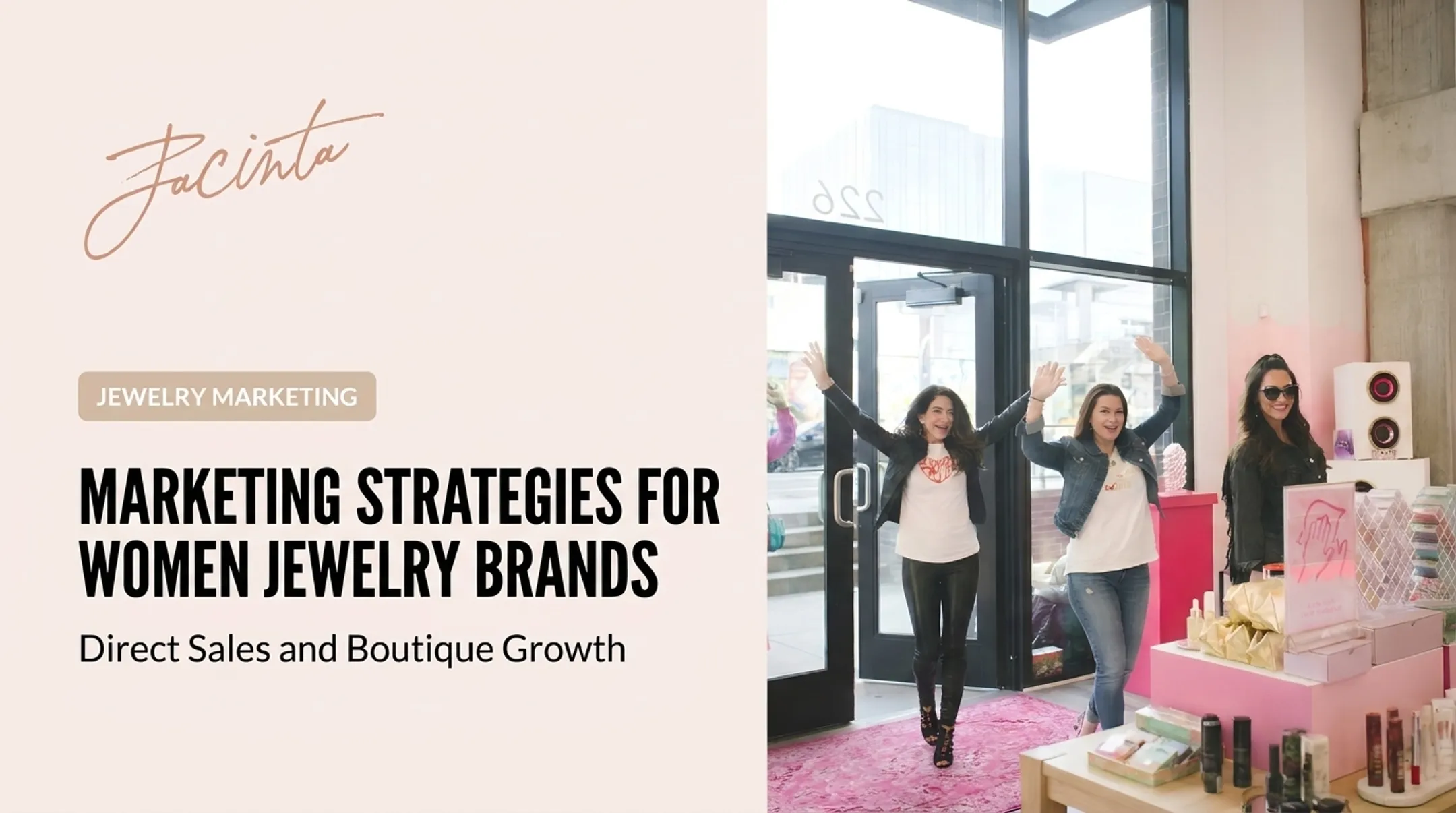

Visibility, trust, and consistent sales take a system, not a pile of posts. Below is a practical one for US jewelry brands: positioning, visual content, social selling, search, product pages, email, and measurement, connected in a single flow.
Devlin Consulting's founder, Jacinta Devlin, spent 12 years selling jewelry at lia sophia and Park Lane Jewelry before coaching other women. The advice below draws on that experience.
Key Takeaways
- Define self-purchasers, gift buyers, and occasion shoppers before picking platforms.
- Turn jewelry into an experience with styling, education, founder stories, and creators.
- Connect social discovery to strong product pages, email capture, and follow-up.
- Judge progress by conversion, acquisition cost, and repeat purchases, not followers.
Build the Strategic Foundation Before Choosing Channels
Instagram, TikTok, Pinterest, and paid ads all work better once you know who you're selling to and what you promise. Skip this step and every channel gets generic content.
Identify the audiences and buying occasions that matter most
Separate shoppers by motivation and timeline: women buying for themselves, gift buyers, milestone shoppers, bridal customers, and repeat customers. Validate these with your own customer, sales, and website data rather than demographic guesses.
De Beers' 2026 Diamond Report shows why this matters. US natural-diamond demand splits into 31% self-purchase, 25% bridal, 20% romantic gifting, and 24% other gifting. That covers diamonds only, not all jewelry, but the lesson holds: different buyers have different missions.

Then pick the occasions you can own: everyday styling, career milestones, birthdays, anniversaries, weddings, seasonal gifting, or a personal reward.
Clarify your positioning
Define what makes you distinct: design aesthetic, materials, craftsmanship, price point, customization, sourcing, founder story, or customer experience. Write one positioning statement and let it steer product descriptions, visuals, creator briefs, emails, and ads.
Map the customer journey
Each stage needs its own call to action:
- Discovery: save a styling guide
- Research: join the email list
- Trust-building: view a collection or book a consultation
- Purchase: buy
- Loyalty: share a customer photo or leave a review
Prioritize channels by capacity
Don't publish everywhere. Start with one primary discovery channel, one owned channel (email), and an ecommerce experience you can maintain. Add more only when the first three run smoothly.
Set goals and a baseline
Before launching anything, document traffic sources, best sellers, conversion rate, email activity, repeat-purchase behavior, and the content you already have. Then choose one commercial objective for the next campaign, such as more qualified product-page visits, more first purchases, or a sold-through seasonal collection.
Create a Visual Social Selling Engine for Your Jewelry Brand
Jewelry sells through scale, movement, texture, and emotional context. A polished white-background photo can't show how a necklace sits on a collarbone or catches light.
Build repeatable content pillars
Plan content around these pillars:
- Product showcases
- Styling ideas
- Education and care guidance
- Maker stories and behind-the-scenes
- Customer experiences
- Launches
One piece can fuel many assets:
- A try-on video
- A close-up of the clasp or setting
- A styling carousel for three outfits
- A care post
- A customer testimonial
- An email feature
Those assets work best when jewelry appears in real life. Show pieces worn, layered, gifted, and packaged. Mix professional photography with smartphone video that reveals scale, shine, texture, and customization. Devlin Consulting's VIP Content Day, an on-location directed shoot, is one way to batch this footage.
Choose platforms by intent
The Knot's 2024 engagement study of 7,800+ US couples found that among those researching rings, 62% used Instagram and about 34% used TikTok. That reflects discovery, not checkout.

- Instagram: styling, Reels, Stories, DMs
- TikTok: try-ons, live selling, TikTok Shop
- Pinterest: evergreen gift and styling ideas
- YouTube Shorts: short demos, if you have video capacity
Use product tags, collection links, and shoppable features wherever they shorten the path to purchase. TikTok Shop may require category qualification and documents that match your listings.
Use creators, customers, and founder voice
Choose creators for style fit, audience values, and engagement quality, not follower count alone. Settle terms up front:
- Deliverables and usage rights
- Unique links or codes
- Content ownership
- Disclosure language
- The outcome you'll measure
Founder videos, live styling sessions, polls, and quick replies make a small brand feel accessible. Build a simple process to collect permission-based customer photos, reviews, and questions. They inform future content and product ideas.
Turn Discovery Into Ecommerce Revenue and Repeat Sales
Your website, email list, ads, and post-purchase experience are the conversion system behind your social content. Attention without this system fades.
Optimize product and collection pages for confidence
Every product page should answer the questions a shopper can't ask aloud:
- Materials, dimensions, fit, and care
- Availability, shipping, returns, and customization
- Multiple views, zoom, and an on-body photo or video
- Reviews, styling suggestions, and a clear call to action
Conversion lift for each feature varies by brand, so test these on your own pages.
Make the brand discoverable in search
Build collection pages and guides around real questions: styling, material comparisons, care, gifting, sizing, and occasions. Write original product copy and descriptive alt text, link internally, and add product structured data.
Google says product markup can support richer results showing price, availability, reviews, and shipping, though display isn't guaranteed. For AI search features, Google requires no special schema; helpful, indexed content is enough.
Build an email and retention system
Core flows:
- Welcome series
- Browse and cart abandonment
- Post-purchase education and care
- Review requests
- Birthday or anniversary reminders
- Early access to new collections
Segment by purchase history, product interest, occasion, and engagement. Follow CAN-SPAM: accurate headers, a physical postal address, a working opt-out honored within 10 business days.
Use paid acquisition with discipline
Split prospecting from retargeting. New audiences get education and brand story; returning visitors get product proof and reminders. Test creative, audiences, offers, and landing pages, and judge results by customer acquisition cost, contribution margin, returns, and inventory, not platform-reported revenue alone.
Plan launches and seasons around intent
NRF expected about $7B in Valentine's Day and $7.5B in Mother's Day jewelry spending in 2026. Those are all-channel intentions, not online-only sales, but they show gifting moments worth planning for.

Build a calendar covering gifting seasons, milestones, bridal demand, launches, and evergreen self-purchase. Prepare assets, emails, creator content, inventory, and delivery deadlines early. USPS recommended a December 17 send-by for Ground Advantage before Christmas in 2026. Use urgency only when it's real.
Protect trust and compliance
Verify claims against current US rules. This isn't legal advice; have questionable language reviewed.
- Metals: the FTC Jewelry Guides restrict misleading gold and vermeil claims.
- Lab-grown stones: identify them clearly; disclose treatments in the product description.
- Sustainability: avoid broad "eco-friendly" claims.
- Creators: disclose free or discounted products wherever the endorsement appears.
- Reviews and sale prices: no fake testimonials, no inflated "original" prices.
Measure, Improve, and Scale the Marketing System
Build a simple dashboard by funnel stage and audience. Track:
- Qualified traffic and email growth
- Product-page engagement and conversion rate
- Average order value and customer acquisition cost
- Repeat purchase, refunds, and contribution margin
For context, Littledata's benchmarks across 421 Shopify stores show a 1.4% median conversion rate. That's general Shopify data, not jewelry-specific.
Improve attribution with consistent UTMs, analytics events, creator links, clear discount-code rules, and post-purchase surveys. Platforms count conversions differently, so cross-check them against your store data.
Then follow a 90-day sequence:
- Audit the current funnel.
- Fix the highest-friction conversion point.
- Launch one focused content or acquisition campaign.
- Review results.
- Expand what's profitable and sustainable.
Founders who want individualized planning can work with Devlin Consulting on customized strategy, systems, automation, and coaching instead of relying on generic templates.
Frequently Asked Questions
What are the best digital marketing strategies for jewelry stores?
Combine clear positioning, visual social content, SEO, strong product pages, email, retargeting, creator partnerships, and measurement. The right mix depends on whether you prioritize ecommerce, appointments, gifting, or repeat purchases.
Do online jewelry stores make money?
They can, but profit depends on margins, pricing, acquisition cost, conversion, fulfillment, returns, and inventory. Brilliant Earth reported a 57.5% gross margin alongside a $6.4M net loss, so validate your own numbers.
How do I market a women's jewelry brand on social media?
Post a steady mix of try-ons, styling ideas, product education, founder content, customer stories, and creator collaborations, with shoppable links. Choose formats your audience likes and your team can sustain.
What should a jewelry product page include?
Clear photos and video, dimensions, materials, sizing, care, availability, shipping and returns, reviews, styling context, trust signals, and a prominent purchase or consultation button.
How much should a jewelry brand spend on digital marketing?
Base it on margins, inventory, growth goals, and acquisition economics. Start with a defined test budget and scale only after results prove profitable.