Introduction
You've spent months building your Instagram. Your TikTok is finally gaining traction. Your LTK profile is growing. And then — an algorithm change. Reach drops overnight. Metricool's 2026 social media study found Instagram Reels reach fell 35% year over year. That audience you worked so hard to build? You don't actually own it.
Your email list is different. No algorithm controls who sees your message. No platform can delete your subscribers. It's the one business asset that's fully yours.
If you're starting from zero, that can feel overwhelming. This guide covers exactly what you need to get moving: the setup, proven growth strategies, common mistakes to avoid, and how to choose the right platform.
TL;DR
- Your email list is the only audience you truly own — unlike social followers, subscribers can't be taken from you by an algorithm or platform change
- A small, engaged list can generate real revenue; you don't need thousands of subscribers to start
- Build fast with a compelling lead magnet, multiple capture points, and promotion to your existing audience
- Never import contacts who didn't opt in — it kills deliverability and violates email regulations
- Pick one platform, set it up, and stay consistent — complexity comes later
Why Your Email List Is Your Most Valuable Business Asset
Social media built your brand. Email sustains your business.
According to Litmus, email marketing averages $36 returned for every $1 spent — making it the highest ROI channel in digital marketing. No social platform comes close, and unlike social reach, email results don't evaporate when an algorithm shifts.
For women in social selling, direct sales, and influencer marketing, this gap matters. You may have thousands of Instagram followers, an LTK profile with real engagement, and a growing TikTok presence — but all of that sits on platforms you don't control. An email list converts that social audience into a stable, monetizable business foundation.
Size Doesn't Matter as Much as You Think
Here's something most people don't realize until they're already building: a small, engaged list beats a massive, disengaged one every time.
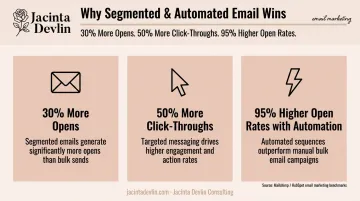
Segmented emails drive 30% more opens and 50% more click-throughs than unsegmented emails, according to HubSpot. Small businesses using automations see 95% higher open rates and 167% higher click-through rates than bulk sends. The quality of your relationship with subscribers, not the subscriber count, drives revenue.
A list of 300 people who trust you and look forward to your emails will outperform a list of 3,000 people who barely remember signing up.
What You Need Before You Start Building Your List
Trying to grow without these three things in place means wasting every bit of attention you capture. Set them up first.
An Email Marketing Platform
You need a dedicated email service provider — not Gmail, not Outlook. A proper platform manages subscribers, automates your welcome sequence, and tracks performance so you know what's working.
Most platforms have free tiers ideal for beginners. Mailchimp's free plan supports up to 250 contacts. Kit's free plan goes up to 1,000 subscribers. There's no reason to pay until you need to.
Using a free Gmail or Yahoo address as your sender email creates deliverability problems. Mailchimp specifically recommends using a private domain to prevent bounces. Before you send a single email, set up a branded sender address.
A Professional Email Address and Landing Page
A branded email address (yourname@yourbusiness.com, not yourname@gmail.com) builds credibility and protects deliverability. Pair it with even a basic one-page landing page — you don't need a full website. A clean, simple page that explains what subscribers get is enough to start capturing leads.
A Clear Picture of Who You're Building For
This one step shapes everything else. Before you create a lead magnet or write a single subject line, you need to know exactly who you're building for. Ask yourself:
- Who is your ideal subscriber?
- What does she struggle with day-to-day?
- What would she find genuinely valuable enough to trade her email for?
Without that clarity, list growth stalls — generic messaging attracts no one. It's one of the first things Jacinta Devlin works through with clients inside her Business Launch Program, because getting the targeting right from the start changes how quickly everything else clicks into place.
How to Build Your Email List: Step-by-Step
Step 1: Create a Lead Magnet Your Ideal Subscriber Actually Wants
A lead magnet is a free, valuable resource you offer in exchange for an email address. "Sign up for updates" is not a lead magnet — it offers nothing immediate, and it doesn't work.
The best lead magnets solve one specific problem quickly. GetResponse's 2026 lead magnet study found that 58.6% of marketers said short-form written content — checklists, newsletters, ebook samples — had the highest conversion rates. Keep it simple and consumable.
Examples that work for Jacinta's audience:
- A checklist: "10 Ways to Earn Your First $1K Selling Online"
- A free style guide or lookbook for boutique owners
- A short video training: "5 Ways to Make Sales Online"
- A discount code for a product-based business
- An affiliate marketing starter guide: "10 Affiliate Link Programs To Apply For No Matter How Many Followers You Have" (an actual lead magnet Jacinta uses)
If your lead magnet is immediate, actionable, and solves a real problem for your specific audience, it will convert.
Step 2: Choose Your Platform and Set Up Your Signup Form
Pick a platform (more on this below), create a signup form, and embed it on your landing page. Your form should clearly state:
- What they're getting (the lead magnet)
- What to expect (how often you'll email them)
A clean, simple form that communicates the benefit converts better than a complicated one — no design degree required.
Step 3: Write a Welcome Sequence (At Least 3 Emails)
Your welcome sequence is the most important email series you'll ever write. GetResponse data shows welcome emails average an 83.63% open rate compared to 40.08% for regular newsletters. People are paying close attention right after they subscribe. Don't waste that window.
A basic 3-email welcome sequence:
- Email 1: Deliver the lead magnet + introduce yourself briefly
- Email 2: Share your story, what you stand for, and what subscribers can expect
- Email 3: Provide genuine value + make a soft offer
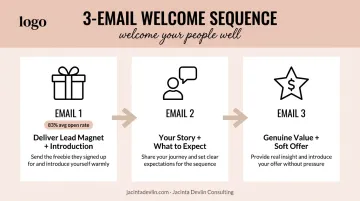
According to Omnisend's 2026 benchmark, automated emails generate $3.41 per email versus $0.15 for campaign emails. That's a 22x difference. A welcome sequence running on autopilot while you're focused elsewhere is one of the highest-leverage things you can build into your business.
Step 4: Add Multiple Capture Points
One signup form buried in a footer won't build your list. Put capture points everywhere your audience already is:
- Website homepage and blog posts
- Instagram bio link
- Instagram Stories (link sticker)
- LTK profile description
- Checkout page (for product sellers)
- In-person events and DM conversations
The more places people can find your offer, the faster your list grows.
Step 5: Promote Your List to the Audience You Already Have
Once your capture points are set, your fastest path to first subscribers is the audience you've already built. Post about your lead magnet on social. Mention it in Stories. Email current customers. Ask peers to share.
Set a goal of 100 subscribers first. It's achievable, it's motivating, and it forces you to learn what's working before you scale. Hit that number, and you'll have real data — and real momentum — to grow from.
Strategies to Grow Your Email List Faster
Once your foundation is in place — lead magnet, welcome sequence, capture points — these strategies move the needle faster.
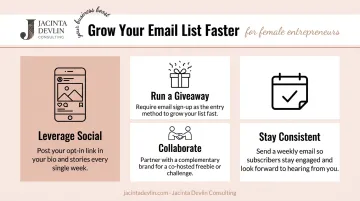
Leverage Your Existing Social Audience
If you already have followers on Instagram, TikTok, or LTK, you have a head start. The goal is converting social attention into email subscribers by consistently pointing your audience toward your lead magnet.
- Link your lead magnet in your bio
- Post about it at least once per week until you hit your first growth milestone
- Create content that teases what's inside your emails — give people a reason to want more
For influencers and social sellers with warm audiences, this is often the single fastest list-building tactic available. You don't need to find new people — just move the ones already watching you.
Run a Giveaway or Exclusive Offer
A time-limited giveaway or exclusive discount can bring a fast influx of new subscribers. Beardbrand doubled its email list and grew its social footprint 400% in seven days using a contest campaign. For boutique owners and product sellers, this is a particularly natural fit.
The caveat: these subscribers need a strong welcome sequence to convert from freebie-seekers into loyal customers. Without follow-up, the list growth is hollow.
Collaborate With Other Women Entrepreneurs
Collaborations let you reach entirely new audiences without starting from scratch — and it's one of the most overlooked strategies for beginners. Find women building audiences that overlap with yours, but who aren't direct competitors, then look for mutual introductions. Tactics that work well:
- List swaps (each of you features the other to your subscribers)
- Guest spots in each other's newsletters
- Co-hosted webinars or live events with a shared sign-up page
Stay Consistent With Your Email Content
List growth is partly reputation-driven. When subscribers open your emails, enjoy them, and forward them to a friend, word-of-mouth brings new sign-ups organically.
You don't need elaborate campaigns. Emailing consistently — even once a week with a tip, story, or update — outperforms sending perfectly designed emails twice a year. Show up regularly, and your subscribers become your best recruiters.
Common Mistakes to Avoid
A few missteps can quietly kill your list before it ever gains momentum. Watch out for these three:
Buying or Importing a Contact List
Purchased lists are non-compliant — those people never agreed to hear from you. The FTC states each CAN-SPAM violation can trigger penalties up to $53,088. Beyond the legal risk, it damages your sender reputation and sends your emails straight to spam.
Not Giving Subscribers a Clear Reason to Join
"Sign up for my newsletter" is not a value proposition. Your signup form must communicate a specific, tangible benefit — what they get, immediately, for subscribing.
Collecting Subscribers and Then Going Quiet
This one's common, usually from fear of bothering people or waiting until everything feels perfect. A quiet list goes cold fast. Open rates drop. Subscribers forget who you are.
Consistency beats perfection. A short, imperfect email sent weekly does more for your business than a polished one that never gets sent.
Choosing the Right Email Marketing Platform
Platform choice matters far less than beginners think. The best platform is the one you'll actually use consistently. Here's a quick comparison of the most relevant options:
| Platform | Free Tier | Best For |
|---|---|---|
| Mailchimp | 250 contacts, 500 sends/month | Beginners; most recognized platform |
| Flodesk | Paid from $28/month | Boutique owners, style brands, design-focused businesses |
| Kit (ConvertKit) | Free up to 1,000 subscribers | Creators, coaches, content-focused businesses |
| Klaviyo | Free up to 250 profiles | E-commerce and product sellers with larger lists |
Pricing based on official pages accessed June 2026 — verify before signing up.
Of these, Jacinta personally recommends and uses Flodesk — it's built for small businesses, has beautiful templates, and charges a flat monthly rate regardless of list size (no surprise bills as you grow). For women just starting out, Flodesk or Kit's free plan for up to 1,000 subscribers are the two most practical starting points.
Regardless of platform, look for these non-negotiables:
- Automated sequences (for your welcome series)
- Customizable signup forms
- List segmentation
- Basic analytics (open rate, click rate)
- Compliance tools (auto-unsubscribe, spam act compliance)
Pick one and set it up. You can always switch platforms later — the list you build is yours to take with you.
Frequently Asked Questions
How many subscribers do I need before I can make money from my email list?
There's no minimum. Even a few hundred engaged subscribers can generate real revenue with the right offer. Kit published a case study showing a creator hit $10,000/month in revenue with fewer than 2,000 subscribers. What matters more than size is the quality of your relationship and the relevance of your offer.
What's the best free email marketing platform for beginners?
Mailchimp is the most widely used free option, with 250 contacts and 500 sends per month on its free plan. Flodesk is the stronger choice for design-focused or product-based businesses; it's what Jacinta uses and recommends, and its flat-rate pricing makes budgeting simple.
How often should I email my list?
Start with once a week, which keeps you visible without overwhelming anyone. Campaign Monitor data points to 2-3 times per week as a performance peak, but that's not the right starting point for most beginners. The best frequency is whatever you can maintain consistently.
What makes a good lead magnet for women entrepreneurs?
A strong lead magnet solves one specific problem immediately and is easy to consume. Checklists, short video trainings, discount codes, style guides, and affiliate marketing starter lists all work well depending on the business. Short-form written content tends to convert best — pick a format you can create quickly and deliver immediately.
Can I add people I already know to my email list?
Only if they opt in. Adding contacts without permission violates CAN-SPAM and GDPR, and it can permanently damage your deliverability. The right move: personally invite them and direct them to your signup form. Let them choose to join.
How do I grow my email list using social media?
Promote your lead magnet consistently: link it in your bio, mention it in Stories, and post about it at least once a week. Converting even 1–2% of your existing followers into subscribers is often the fastest way to build momentum from zero.