
Introduction
You're posting consistently. You've got a logo. You're showing up on Instagram, doing the things you've seen other women do — and yet the followers aren't converting, the inquiries aren't coming, and it feels like you're invisible.
What's actually missing isn't more content or a better posting schedule. It's a clear brand strategy.
Research from McKinsey found that 71% of consumers expect personalized interactions — and 76% get frustrated when they don't happen. For women building personal brands in social selling, affiliate marketing, or direct sales, that stat cuts straight to the issue: an unclear brand can't be personal, and an impersonal brand doesn't convert.
This guide walks through every step of building an online brand that actually works: foundation, visual identity, content strategy, and the income streams a strong brand unlocks.
TL;DR
- Brand clarity comes first: define your mission, audience, and positioning before touching design or content
- Visual identity (logo, colors, fonts) needs to be consistent across every platform and touchpoint
- Content is how your audience finds you and decides to trust you; storytelling and real value drive organic growth
- A strong, cohesive brand creates multiple income streams — affiliate deals, brand partnerships, and loyal buyers who refer others to you
Step 1: Define Your Brand Foundation — Who You Are and Who You Serve
No logo fixes a fuzzy identity. No posting schedule compensates for a brand that hasn't figured out who it's for. This is the step most women skip — and it's why they end up spinning their wheels.
Start With Mission, Values, and Your Unique Value Proposition
Your brand foundation has three parts:
- Mission: Why does your brand exist beyond making money? What problem do you solve, and who do you solve it for?
- Core values: The non-negotiables that guide how you show up, what you say yes and no to, and how you treat your audience
- Unique value proposition (UVP): What you offer that no one else does in quite the same way
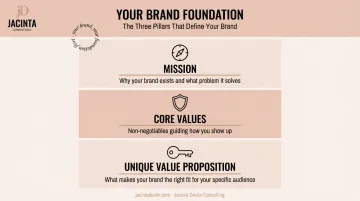
The UVP isn't just "I sell skincare" or "I'm a style influencer." It's the specific combination of your expertise, perspective, and audience that makes your brand the right fit for your people — and not for everyone else.
Get Specific About Your Ideal Customer
Demographics — women, 25-45, interested in fashion — are just a starting point. Go deeper:
- What keeps her up at night?
- What has she already tried that hasn't worked?
- What does she really want — the surface desire and the deeper one underneath it?
- Where does she spend time online?
The clearer this picture, the more magnetic your brand becomes to the right people — and the less energy you waste attracting the wrong ones.
Write Your Brand Positioning Statement
A positioning statement is one to two sentences that captures who you serve, what you do, and why it matters. Use this fill-in-the-blank to draft yours:
"I help [audience] achieve [result] through [method or approach]."
Keep it specific. "I help ambitious women" is vague. "I help women in direct sales build a personal brand that converts followers into buyers through content strategy and affiliate marketing" is a brand.
Craft an Authentic Brand Story
Your brand story isn't a polished bio. It's the real narrative — the before, the struggle, the turning point, and the transformation.
Jacinta Devlin's story is a strong example. At 21, she was a broke college student who walked into a direct sales jewelry party looking for extra cash. That decision turned into a 12-year direct sales career, a Top 1% ranking, and a million-dollar earnings record.
It eventually led to a role as National Director of Sales & Field Training at Stella & Dot, where she helped over 50,000 women grow their businesses. Women kept asking how she did it — and that demand is what led to launching Jacinta Devlin Consulting.
That arc — relatable beginning, real struggle, earned expertise — is what builds trust. Your story works the same way. Share it.
Define Your Brand Voice
Your brand voice is how your brand sounds across every caption, email, DM, and bio. Pick 3-5 adjectives that describe your brand's personality as if it were a person.
- Warm and direct, like a trusted friend giving real advice
- Bold and motivating, with a push-through-it energy
- Playful but credible, keeping things light without dumbing them down
Those words become your filter for every piece of content — so your audience always knows it's you, even before they see your name.
Step 2: Build Your Visual Identity
Your visual identity is how people recognize you before they read a word — and research shows that first impression forms in as little as 50 milliseconds. Get it right, and everything else has a foundation to build on.
The Core Visual Elements
| Element | What to Define |
|---|---|
| Logo | Simple, scalable, reflects brand personality |
| Color palette | 3-5 colors guided by audience preferences and color psychology |
| Typography | 1-2 consistent fonts used across all platforms |
| Photography style | Consistent lighting, tone, and aesthetic across all imagery |
None of these need to be expensive. But they do need to be deliberate and consistent.
Why Consistency Is the Real Goal
Marq's brand consistency research found that consistent brand presentation is associated with 10-20% higher overall growth — yet only 30% of organizations enforce their brand guidelines consistently, even though 85% have them.
Most brands already have the assets. The ones that grow are the ones that actually use them — every time, on every platform.
Create a Brand Style Guide
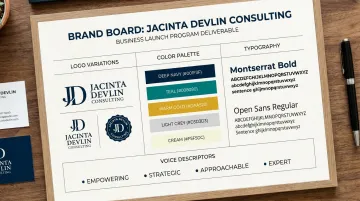
A brand style guide doesn't need to be a 40-page document. A single page is enough — as long as it covers the essentials:
- Logo variations (primary, secondary, icon)
- Color hex codes for your full palette
- Font names and usage rules (headings vs. body)
- Voice guidelines (tone, words you use, words you avoid)
With that one page, every piece of content — whether you create it or a contractor does — looks and sounds like the same brand.
That's the same approach used in Jacinta Devlin Consulting's Business Launch Program, where building a Brand Board (logo, colors, typography, voice) is one of the first structured steps clients complete. It comes before social strategy, before content, and before launch — because everything that follows needs a consistent visual language to stand on.
Step 3: Establish Your Online Presence
Build a Website You Own
Your website is the one place your brand lives that isn't controlled by an algorithm. Social platforms can change their rules overnight. Your website can't be taken away.
A strong website for a woman entrepreneur in the social selling or affiliate space needs:
- A clear bio or About section with a high-quality photo
- An explanation of who you help and how
- Your offers or services with easy-to-find links
- Testimonials or social proof
- An email opt-in
Speed matters too. Google's data shows 53% of mobile visitors abandon a page that takes more than 3 seconds to load. If your site is slow or not mobile-optimized, you're losing people before they even see your brand.
Choose Platforms Strategically
Pick 1-2 platforms and go deep rather than spreading thin across five. For women in the social selling, affiliate, and influencer space, the highest-leverage platforms are:
- Instagram — visual storytelling, personal brand building
- Facebook Groups — community building and direct engagement
- TikTok — organic reach and discovery
- LTK — affiliate sales and shoppable content
- Amazon — storefront sales and passive income streams
Jacinta's clients have built Facebook Groups to 36,000+ members and grown Instagram followings from 500 to 95,000+ by showing up consistently in the right places, not all of them.
Optimize Every Profile
Across every platform, make sure you have:
- The same username (or as close as possible)
- A professional headshot — not a logo, not a product photo
- A bio that states clearly who you help and how
- A single link that drives traffic to your most important offer or opt-in
Start Building Your Email List From Day One
Your profiles and platforms are rented space. Social platforms can disappear or deprioritize your content — your email list is the audience you actually own.
A simple lead magnet — a free checklist, a short training, a resource list — is enough to start. Email marketing consistently outperforms other channels; Litmus reports an average ROI of $36 for every $1 spent. That number is context-dependent, but the principle holds: email converts better than social, and you control it.
Step 4: Create Content That Attracts and Builds Trust
Content is how potential customers find your brand, decide if they like you, and determine whether they trust you enough to buy. Volume without strategy just creates noise — what you post and why matters far more than how often.
The Content Mix That Works
A healthy content mix prevents your feed from feeling like a constant sales pitch:
- Educational content (40-50%): Tips, how-tos, tutorials that answer your audience's real questions
- Personal story content (20-30%): Behind-the-scenes, transformation moments, honest shares that build emotional connection
- Social proof content (15-20%): Client wins, testimonials, screenshots of results
- Promotional content (10-15%): Offers, calls to action, links to buy
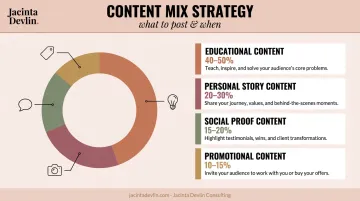
When the promotional content is the minority, it lands harder — because your audience has already been receiving genuine value.
Storytelling Is Your Highest-Trust Content Format
People don't just buy products or services. They buy people. The behind-the-scenes posts, the honest "here's what didn't work" moments, and the real transformation stories are what move followers from curious to committed.
Your story — the before, the messy middle, the after — is not a distraction from your brand. It is your brand. That's especially true when you're building in social selling or influencer marketing, where connection drives conversion more than any ad ever will.
Short-Form Video and Visual Consistency
Storytelling doesn't just live in captions — it's what makes your video content stop the scroll. Reels and TikTok are where your audience discovers you first. The key to building brand recognition through video isn't production quality — it's consistency. Same backgrounds, similar filters or color tones, and a recognizable on-screen presence create a feed that feels cohesive even when the content varies.
Build Authority Through Depth
Going deep on your niche — sharing genuine expertise, taking positions, offering opinions — is what separates a recognized expert from a content creator with a nice feed. Women who position themselves as the go-to person in their space attract better partnerships, higher-paying clients, and brand collaborations. When you commit to a point of view and share it with specificity, your content gets saved, shared, and sought out — not just scrolled past.
Step 5: Build Trust, Get Visible, and Turn Your Brand Into Income
Social Proof Is Infrastructure
Trust is what converts brand awareness into actual revenue. The most effective way to build it systematically is through consistent social proof: testimonials, client results, screenshots of wins.
Display them on your website. Share them in Stories. Post them regularly. The goal isn't to brag — it's to give potential buyers evidence that your brand delivers on its promises. Collect testimonials actively, not just when someone offers one spontaneously.
Brand Partnerships as Both Validation and Income
Brand partnerships aren't just a revenue stream — they're a credibility signal. When your brand is aligned with companies like Nordstrom or Amazon, it signals credibility to audiences who haven't discovered you yet.
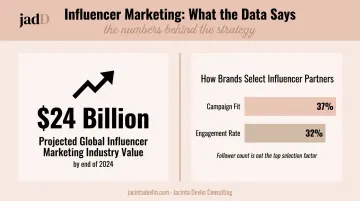
CreatorIQ's 2024 research found that 55% of organizations increased their influencer marketing investment year over year, and that brands and agencies rank campaign fit (37%) and engagement rate (32%) as the top influencer selection criteria — not follower count. A cohesive, professional brand with an engaged audience is what gets you noticed by companies looking for partners — and that market is only growing. Influencer Marketing Hub projects the space will reach $24 billion by end of 2024, and women with clear, consistent brands are positioned to capture a meaningful share of it.
A Brand Is a Business Asset
For women building income through platforms like Amazon, LTK, and brand partnerships, a strong brand is the asset that makes everything else possible. It's what gets you approved on platforms, selected by brands, and trusted by buyers before they've ever spoken to you.
That said, the learning curve is real. The difference between women who figure it out over years and those who reach consistent income within 6–12 months often comes down to strategy quality.
Jacinta Devlin Consulting's individualized coaching programs — including the 12-week Business Launch Program and ongoing Business Growth Program — are built for ambitious women who want a clear strategy and proven systems, not more guesswork. Clients like Sharon B. went from $4,000 in Amazon sales over an entire year to $20,000+ per month. Christina R. grew from 13,000 to 95,000+ Instagram followers and now sells hundreds of thousands monthly through Amazon and LTK.
Build the brand right, and the income channels open up — partnerships, platforms, and buyers all follow from the same foundation.
Frequently Asked Questions
How long does it take to build a brand online?
The brand foundation — mission, positioning, visual identity — can be built in a matter of weeks. Real recognition, trust, and consistent income typically take 6-12 months of intentional effort, though most clients in Jacinta's programs see meaningful momentum in the first 30-60 days with a clear strategy and consistent follow-through.
How do I build a brand online with no money?
Free tools like Canva (used by over 260 million people monthly) and free website builders make the design side accessible. Organic social media costs only time. The most important early investment is clarity of message and consistency of execution — not money.
What is the difference between a personal brand and a business brand?
A personal brand centers on the individual — their story, expertise, and personality — while a business brand can exist independently of its founder. For women in social selling, coaching, or influencer marketing, a personal brand is typically the stronger choice because the founder's story and credibility are the product.
How do I build a brand on social media?
Choose 1-2 platforms where your ideal audience already spends time, optimize your profiles, and show up consistently with content that reflects a clear brand identity. Growth accelerates when your audience can recognize your brand instantly — and when your content gives them a reason to stay.
What are the most important elements of an online brand?
Five non-negotiables: a clear value proposition, consistent visual identity, an authentic brand voice, a professional online presence (website and optimized social profiles), and a content strategy that builds trust with the right audience over time.
How do I know if my branding is actually working?
Look beyond follower count. Growing engagement, inbound inquiries from aligned buyers or brands, unprompted testimonials and referrals, and revenue tied to organic brand awareness are the real indicators. Track these monthly — they show what's connecting and where to adjust.