

Amazon affiliate income spans an enormous range, from a few dollars in the early months to $40,000+ per month for established creators with loyal audiences. The difference isn't luck. It's niche, strategy, and consistency — and understanding where you fall on that spectrum is the first step to climbing it.
This guide breaks down realistic income ranges by experience level, the variables that move earnings up or down, and what it actually takes to reach the higher tiers — using real data and real creator examples.
TL;DR
- Amazon commissions range from 1% (grocery/health) to 10% (Luxury Beauty) — your niche determines your earning ceiling
- Beginners typically earn $0–$500/month; intermediate creators $500–$5,000/month; advanced creators $10,000–$40,000+/month
- Audience trust and conversion rate matter more than follower count
- The Amazon Influencer Program lets social media creators earn from Amazon's own traffic, not just their own audiences
- Layering Amazon with LTK is the most direct route to consistent $5,000+ affiliate months
How Much Can You Actually Earn with Amazon Affiliate Marketing?
There's no single answer — and anyone who gives you one without context is oversimplifying. Your earnings are a product of five variables multiplying together:
Traffic (or reach) × Click-through rate × Conversion rate × Commission % × Average product price
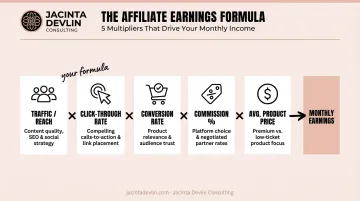
Improve any one of those, and your monthly check grows. The income tiers below give you a realistic roadmap.
Beginner Level (0–12 Months)
Most new affiliates earn under $500/month, and many earn nothing in the first few months. That's normal, not a sign of failure.
According to Influencer Marketing Hub's affiliate benchmark report, 57.75% of affiliate marketers earn less than $10,000/year — under $833/month before costs. For beginners, that figure skews even lower.
This phase is about building content habits, establishing trust, and learning what your audience actually clicks. A new creator sharing Amazon finds on Instagram Stories or a blog might earn $20 one week and $150 the next. That inconsistency is expected, not a red flag.
Intermediate Level (1–3 Years)
At this stage, most creators are earning somewhere between $500 and $5,000/month. The milestones that typically mark this level:
- Consistent weekly posting with a clear niche focus
- A curated Amazon storefront with organized collections
- A growing email list or social following
- Clear understanding of which content formats convert
- First approval for the Amazon Influencer Program
Creators here often start layering Amazon Associates with the Influencer Program and platforms like LTK — which multiplies what a single piece of content can earn.
Advanced / Creator Level (3+ Years or Fast-Track with Strategy)
This is where the numbers get compelling. Business Insider reported that Michael Strahl earned around $10,000/month from the Amazon Influencer Program, hitting $13,500 in December 2025. Creator Janesha Moore has stated she earns roughly $40,000/month in affiliate revenue as an Amazon influencer.
At this level, creators have built a full content ecosystem: a loyal audience, Amazon on-site videos generating passive commissions, a well-organized storefront, and multiple platforms working in sync.
Jacinta Devlin's coaching clients show what's possible with the right strategy. Sharon Bean went from $4,000 total in her first year to consistently making $20,000+ per month after working with Jacinta.
Christina Roach of My Balanced Style hit her 6-figure income goal, quit her full-time job within 6 months, and now sells hundreds of thousands per month across Amazon and LTK.
Key Factors That Determine Your Amazon Affiliate Earnings
Two creators can post the same product to similar-sized audiences and see dramatically different results. These are the variables that actually explain why.
Niche and Product Category Selection
Commission rates vary widely. Amazon's official Associates rate table breaks it down by category:
| Category | Commission Rate |
|---|---|
| Luxury Beauty / Luxury Stores Beauty | 10% |
| Apparel, Fashion, Shoes, Jewelry, Watches | 4% |
| Consumer Electronics | 4% |
| PC / PC Components | 2.5% |
| Televisions / Digital Video Games | 2% |
| Grocery, Health & Personal Care, Physical Video Games | 1% |
| All Other Categories | 4% |
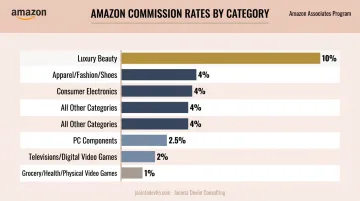
A fashion and beauty creator has a structurally higher earning ceiling than someone primarily promoting electronics or groceries. But commission rate is only half the equation — product price matters just as much.
A 3% commission on a $300 item earns $9. A 4% commission on a $20 item earns $0.80. Mix higher-ticket recommendations into your content intentionally, not just whatever's trending.
Audience Size vs. Audience Trust
You don't need a massive following to earn meaningful affiliate income. Conversion rate — the percentage of people who click and actually buy — matters far more than raw audience size.
A trusted creator with 10,000 engaged followers can out-earn a creator with 500,000 passive ones. Captiv8's analysis of 150,000+ posts from 17,000+ affiliate creators found that nano-influencers (under 50,000 followers) saw a 74% jump in revenue per click — driven entirely by trust, not reach.
Trust is built through:
- Showing products in real use (try-ons, demos, honest reviews)
- Sharing specific personal details (sizing, fit, how long you've owned it)
- Answering specific questions rather than just showcasing products
Content Format and Platform
Not all content converts equally. These are the formats that tend to perform:
- Amazon on-site videos — passive commissions from Amazon's own shopper traffic; only available to Influencer Program members
- YouTube — high buyer intent; viewers in research mode tend to purchase
- Instagram Reels + Storefront — visual discovery, strong for fashion and home
- TikTok — viral potential, but harder to drive direct link clicks
- Blog/SEO content — slower to build, but evergreen and compounding over time
One often-overlooked mechanic: Amazon's 24-hour cookie window. When someone clicks your affiliate link, any purchase they make on Amazon within 24 hours earns you a commission — not just the item you linked. On a high-traffic day (a viral Reel, a holiday gift guide), that single click window can generate far more than the linked product alone.
Traffic Volume and Consistency
Volume compounds. A creator posting three times a week builds reach and commission earnings faster than someone posting sporadically — and the data backs this up. Ahrefs cites Authority Hacker research showing affiliate marketers with 3+ years of experience earn 9.45x more than beginners. That gap is mostly a consistency story, not a talent story.
Low Earners vs. High Earners: What Actually Makes the Difference?
| Low Earners (Under $500/month) | High Earners ($5,000+/month) | |
|---|---|---|
| Approach | Share links without strategy | Treat it like a business |
| Niche | Broad, inconsistent product mix | Clear niche with aligned products |
| Content | Generic product posts | Specific use cases and buyer intent |
| Tracking | Don't know conversion rates | Optimize based on what converts |
| Platforms | Amazon only | Amazon + Influencer Program + LTK |
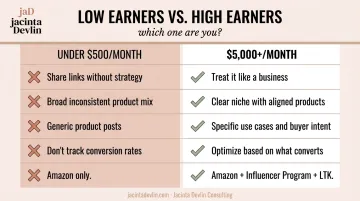
High earners focus on specific use cases: "travel essentials for carry-on only," "home office setup under $200," "everything in my morning routine." That specificity answers real questions and drives purchases with context and conviction.
Platform diversification is the other major lever. Layering Amazon Associates with the Influencer Program and LTK means earning from the same content across multiple affiliate platforms at once. That's how creators reach $5,000+ months without increasing their content output.
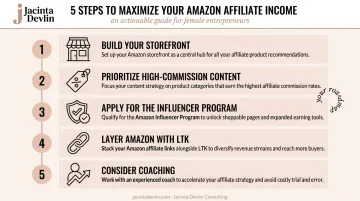
How to Maximize Your Amazon Affiliate Income as a Creator
Knowing the income potential is only useful with a strategy to reach it. Here are the core levers:
1. Build your Amazon storefront strategically Curate collections around your audience's lifestyle moments — seasonal, occasion-based, niche-specific. A well-organized storefront with on-site videos can generate passive commissions from Amazon's own traffic without any additional promotion on your end.
2. Prioritize high-commission, high-intent content Identify the product categories in your niche with the highest commission rates (Luxury Beauty at 10%, Apparel at 4%) and build dedicated content around them: gift guides, "my favorites under $50," outfit breakdowns with exact sizing.
3. Apply for the Amazon Influencer Program Associates is available to anyone. The Influencer Program requires an application (Amazon reviews your follower count and engagement on YouTube, Instagram, TikTok, or Facebook) and grants access to a personal storefront plus on-site video commissions — earning from Amazon's own shoppers, not just traffic you send externally. Jacinta guides her coaching clients through the application and approval process for both platforms.
4. Layer Amazon with LTK for compounding income LTK connects creators to 7,000+ retailers with typical commission rates of 10–25%. Creators posting shoppable content across both Amazon and LTK earn from the same content on multiple platforms simultaneously. Jennie S., one of Jacinta's clients, was approved for both Amazon and LTK within her first year and reached $5,000+ per month across multiple brands.
5. Consider coaching to compress the learning curve Most creators spend 1–2 years figuring out what actually converts before they hit consistent $1,000+ months. Working with a coach who has direct Amazon affiliate and influencer experience can compress that timeline by months, sometimes years.
Jacinta Devlin's 1:1 Business Growth Program (starting at $3,500+) has helped clients like Sharon Bean scale from $4,000 total in year one to $20,000+ per month. Christina Roach of My Balanced Style reached six figures and left her 9-to-5 within six months. Book a free 15-minute consultation to explore whether coaching is the right fit.
What Most Beginners Get Wrong About Amazon Affiliate Earnings
Most beginners make the same handful of mistakes — and each one quietly kills their earning potential before they ever gain traction.
Waiting for a "big enough" audience. Conversion rates are built through consistent posting, not follower count milestones. Start now with the audience you have.
Promoting too broadly. Scattered links across unrelated products confuse your audience and tank click-through rates. The highest-converting content answers one specific question and recommends products with genuine personal context.
Treating it like passive income from day one. Amazon affiliate income does become more passive over time — especially once you have a storefront and shoppable videos working for you. But the early stages require active, consistent content creation. Most people quit before meaningful returns show up. Those who stick past the 12-18 month mark are the ones who see real income growth.
Frequently Asked Questions
Frequently Asked Questions
How much money can you make with Amazon affiliate marketing?
Earnings range from virtually nothing for beginners to $40,000+ per month for established creators. Most intermediate affiliates earn $500–$5,000/month. Your niche, audience trust, and content consistency drive income far more than follower count alone.
How many followers do you need to make real money with Amazon affiliates?
There's no follower count threshold. A highly engaged audience of 5,000–10,000 can out-earn a disengaged audience of 100,000. Conversion rate and buyer intent matter far more than raw numbers.
What is the difference between Amazon Associates and the Amazon Influencer Program?
Associates is open to anyone with a website or social presence and focuses on link-based commissions. The Influencer Program is application-based, provides a shoppable storefront, and unlocks on-site video commissions from Amazon's own shopper traffic. That means you earn from Amazon's visitors, not only from traffic you send yourself.
Which Amazon product categories pay the highest commission rates?
Luxury Beauty pays 10%, Apparel and Fashion pay 4%, and most other categories pay 1–4%. Groceries and physical video game consoles pay as low as 1%. Choosing a higher-commission niche materially affects your earning ceiling.
Do you need a blog to make money with Amazon affiliate marketing?
No. Social media creators on Instagram, TikTok, and YouTube can earn through the Amazon Influencer Program and external links. A website helps with SEO longevity but is not required to start earning.
How long does it take to start making consistent Amazon affiliate income?
Most creators see their first commissions within a few months, but consistent income in the hundreds to thousands per month typically takes 6–18 months of regular content creation. Affiliates with 3+ years of experience earn 9.45x more than beginners, which means longevity is the single most reliable path to meaningful income.